NC State was picked to win the Maui Invitational. Instead, they’re heading back to Raleigh after finishing 6th, going 1-2 after last night’s 102-97 loss to Texas.
Let’s start by saying that the season is still very young. New players, new staff…you know the drill. But it’s clear that Will Wade is pissed off. He expected more, and he didn’t hold back last night in the post-game press conference.
Wade took full responsibility for the team’s performance, saying…
“I didn’t have us prepared like we needed to, and just very disappointing game today, and quite frankly, just an incredibly disappointing week for us.”
And added…
“..It’s not on the players. It’s on me. It’s my job to lead the program. It’s my job to get everybody right, and get us better, get us moving in the right direction, and we haven’t done that as well as we need to.”
Wade is right for taking this angle. After NC State fans watched Kevin Keatts rarely point to himself or his system for failures, Wade is doing what leaders do and putting everything (even things that really aren’t his fault) on his shoulders. He’s shielding his players and taking the slings and arrows himself. So, as State fans, I think we need to recognize this difference and give this new staff time to get their bearings and make adjustments.
The big thing that stood out was Wade’s comments about changing the system. Here is what he said on that…
“We’re going to have to look at some of our defensive stuff. I mean, we’re just not where we need to be defensively. So I’ve got to look at all that when we get back, and start watching on the plane tonight as we’re flying back.”
Again, 8 years of the prior staff, and I can’t remember an interview where they openly suggested switching up the defense. Here we are with the new staff and 7 games in, you’re seeing them talk about making systematic adjustments.
This is why I think preaching patience here is key. We’ve been through a lot of regime change at NC State, but we’ve never had a staff in place that seemed so openly dedicated to making adjustments and finding new ways to win when the initial strategy falls apart. This was one of our main concerns with the last staff and the reason the fan base was so eager to move on.
So, before we go jumping off a cliff here, let’s see how this staff is able to adjust.
Now, all of that said, this team has some major issues that need correcting.
The good news is that most of those were pointed out by Wade in the presser. He’s very aware, and very frustrated, and as a fan base facing some letdown, that’s what you’d hope to see. Wade pointed out effort and mentality as one of his biggest concerns. He talked about his rotation and needing to look at that. And I’ll get into those areas in an upcoming column…but for now, I want to talk defense.
One area that NC State really failed this week was defensively, and while many of you are commenting about blow-by’s on the perimeter and open 3s, these are symptoms of the system. These are the negative trade-offs you get when you ‘switch everything‘ like NC State is doing.
This was similar to the defense Keatts was running, and the problems Keatts faced were the problems we saw this week in Maui.
There are trade-offs with every system, the goal for the coaching staff is to look at their personnel and look at the cost/benefit for each system, then pick the one that gives you the lowest cost and the highest benefit.
Will Wade has almost always played a defense that switches everything, but when he gets back to Raleigh, you have to wonder if he’s going to tweak this.
Switching everything gets you a lot of things…
- It limits the value of the pick-and-roll for your opponent. No hard hedge and recover. No open shooters off the ball screen. No open roll men.
- It limits the ability to use screens to get guys open. No one’s getting caught up on screens if you simply switch on most of them, even off the ball.
- It creates a simple system in a landscape where roster turnover and lack of chemistry (all new players) are prevalent. One rule –> switch screens. Low complexity.
Switching everything comes with a cost…
- Constant mismatches. Every time you switch, you have a mismatch. If you have a truly interchangeable roster, this is fine, but almost no one has this. The idea of guys who can guard 1 through 5 is mostly a myth. The argument against switching everything is that one of the main goals in basketball is to find advantages and exploit them. Creating mismatches or finding them is the goal. This type of defense accepts that as a cost (and hopes that cost is not greater than the benefit).
- Takes the ‘pride’ out of defense for some guys. This take isn’t backed by any data, but if you’ve played in a real defensive-first system in basketball, you know what I’m talking about. You get an assignment and you take it up on yourself to shut that guy down. That’s your focus. Every point he scores is on you. It’s easy to compute, it brings in a sense of pride to the your defense. But when you switch, you don’t really have ‘a guy’. It’s more of a team strategy, and why in theory that should motivate, it doesn’t really sting as much when the other team scores.
Now, back to the mismatches, to overcome these you need to add in some wrinkles. In the post, NC State is sending double teams, this is creating all those open 3s. Bigs are seeing the double and making skip passes, cross-court, to open shooters.
You’re also getting smaller guards getting the switch and being one one-on-one with Ven-Allen Lubin at the top. NC State is having Lubin drop down a bit to stop the drive (which would cause a whole new slew of problems, ie, needing help-side). But Lubin is mostly daring them to shoot a 3 over him. And opponents are doing that….and hitting.
Early on, Wade and his staff felt like the benefit of this would be greater than the cost. In fact, Wade said that those ‘open 3s were by design’. My guess would be that that this is what they are going to look at, because the outcome hasn’t been good.
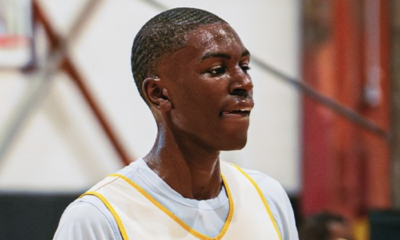
Seton Hall guard Mike Williams (a 33.5% 3pt shooter) was 3-5 from long range – 60%. He finished with 14 points.
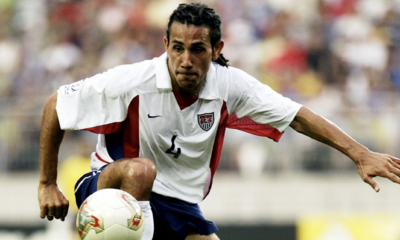
Boise State’s guard Dylan Andrews (a career 33% 3pt shooter) was 5-11 from long range – 45% . He finished with 26 points.
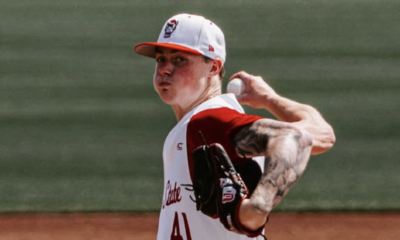
Texas guard Jordan Pope (a career 37% shooter) was 7-13 from long range – 54%. He finished with 28 points.
This is where you need to see the clean-up.
What that ‘clean-up’ looks like isn’t simple because the reason they were doing this in the first place was because of their personnel.
Do you have certain players you don’t switch on? That takes a lot of defensive communication and players staying aware of every screen and which players are involved. Do you go full pack-line defense where you’re hedging and recovering all screens (unlikely based on Wade’s past and point of the season we’re in). Do you try to fix this with personel and rotation?
This is where you have to trust in this staff. The inputs from this weekend are going to show them some serious flaws. The question is, can those flaws be isolated, a fix be implemented, and players be ready to execute against #21 Auburn next week?