
NC State Basketball
Trump’s College Basketball EO: Short-Term Chaos, Long-Term Guardrails? How should NC State donors respond?





Basketball Recruiting20 hours ago
Diamond in the Rough? Gainey surprises everyone, offering unranked 6’10 F Jamil Robinson

Basketball Recruiting21 hours ago
NC State makes Top-5 for Jaydn Jenkins, 6’10 big with at 7 foot wingspan

Football Recruiting2 days ago
NC State Lands 3-Star Cornerback AK Crumel

NC State Football2 days ago
How Much Money is Exchanging Hands in NC State’s Non-Conference Schedule? Here’s What the 2026 Contracts Reveal

NC State Football2 days ago
Cam Newton lists CJ Bailey as one of his Top 5 QBs in College Football

NC State Basketball3 days ago
Gainey says Paul McNeil Jr. has been ‘amazing’ and has stepped into a leadership role
NC State Football2 days ago
Cam Newton lists CJ Bailey as one of his Top 5 QBs in College Football

NC State Football2 days ago
How PFF Graded NC State’s Returning Defensive Players and Transfers in 2025
NC State Football2 days ago
How Much Money is Exchanging Hands in NC State’s Non-Conference Schedule? Here’s What the 2026 Contracts Reveal
Football Recruiting2 days ago
NC State Lands 3-Star Cornerback AK Crumel

NC State Basketball3 days ago
Former Pack stars Richard Howell & Damon Thornton debate the NIL era and where NC State fits in

Podcast1 week ago
PODCAST: The guys recap the Patrick Stacy interview, argue about Quadir Copeland’s game and talk NC State’s MLB Draft

NC State Basketball3 weeks ago
PODCAST: NC State Basketball GM Patrick Stacy joins the pod to talk about building this year’s roster

Podcast2 months ago
PODCAST: How the Elliott Avent retirement / Chris Hart hiring went down, plus 2 new basketball commits

NC State Basketball2 months ago
PODCAST: Roster Construction, Analytics, Position-by-Position Breakdown
-

 NC State Basketball4 days ago
PRESS CONFERENCE TAKEAWAYS: Gainey gives insight into the frontcourt newcomers Jurkovic and Hall
-
 NC State Football4 days ago
How PFF Graded NC State’s Returning Offensive Players and Transfers in 2025
-
 NC State Basketball3 days ago
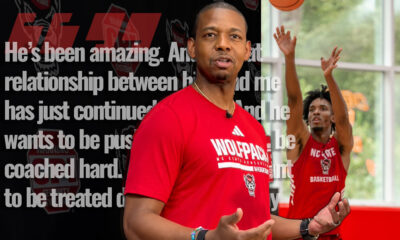
Gainey says Paul McNeil Jr. has been ‘amazing’ and has stepped into a leadership role
-
 NC State Basketball3 days ago
Former Pack stars Richard Howell & Damon Thornton debate the NIL era and where NC State fits in
-
 NC State Football2 days ago
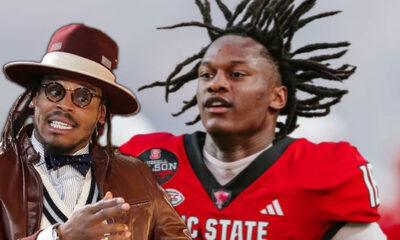
Cam Newton lists CJ Bailey as one of his Top 5 QBs in College Football
-
 NC State Football2 days ago
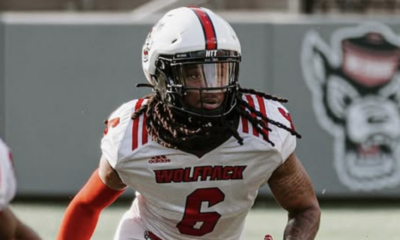
How PFF Graded NC State’s Returning Defensive Players and Transfers in 2025
-
 NC State Football2 days ago
How Much Money is Exchanging Hands in NC State’s Non-Conference Schedule? Here’s What the 2026 Contracts Reveal
-
 Football Recruiting2 days ago
NC State Lands 3-Star Cornerback AK Crumel